
Native to Australia and parts of New Guinea, these frogs are known for their calm temperament, expressive faces, and relative hardiness compared to many other amphibian species. While they are often recommended for beginners, responsible ownership still requires education, preparation, and long-term commitment.
Natural History and Behavior
In the wild, White’s Tree Frogs inhabit forests, woodlands, and even urban environments, frequently sheltering in tree hollows, water tanks, and human structures. They are nocturnal ambush predators, spending much of the day resting and becoming active at night to hunt insects.
Their adaptability in the wild explains why they tend to do well in captivity when their needs are met. White’s Tree Frogs are generally calm, tolerant of stable environments, and less prone to stress than many other amphibians. However, they are still observation-focused pets and should not be handled frequently.
Appearance and Size
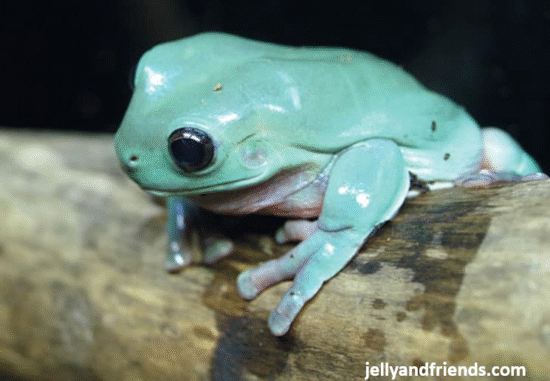
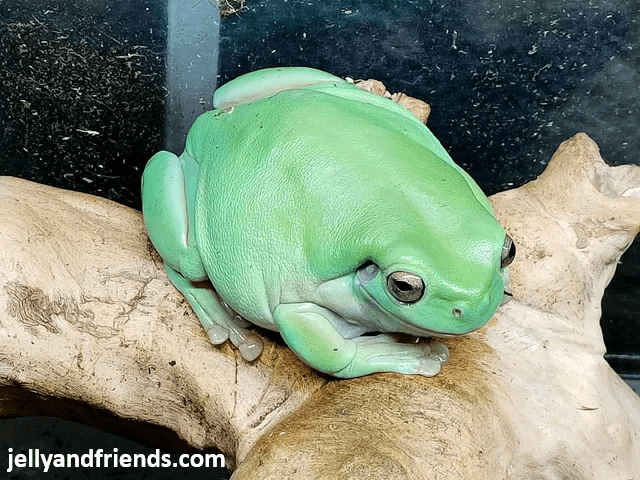
White’s Tree Frogs are easily recognized by their stocky build, large toe pads, and wide, expressive eyes. Coloration ranges from bright green to bluish-green, teal, or even pale tones, often changing slightly based on temperature, humidity, and stress levels.
Adults typically reach 3–4.5 inches in length, with females usually larger than males. With proper care, they can live 15–20 years, making them a long-term responsibility rather than a short-term pet.
Housing and Environment
White’s Tree Frogs are arboreal and require vertical space to climb and perch. A single adult should be housed in at least an 18x18x24-inch enclosure, with additional space needed for multiple frogs. Enclosures should include branches, foliage, hides, and elevated resting areas.
Humidity should be maintained at 40–70%, with daily misting and access to clean, dechlorinated water. Ideal temperatures range from 72–85°F during the day, with a mild nighttime drop. Cleanliness is especially important, as amphibians absorb water and chemicals directly through their skin.
Diet and Feeding
In captivity, White’s Tree Frogs primarily eat live insects such as crickets, roaches, and worms. Prey should be appropriately sized and gut-loaded for nutritional value. Calcium and vitamin supplementation is essential to prevent metabolic bone disease.
These frogs have enthusiastic feeding responses and are prone to obesity if overfed. Maintaining a proper feeding schedule and monitoring body condition is an important part of responsible care.
Handling and Health
White’s Tree Frogs are more tolerant of brief handling than many amphibians, but handling should still be minimal and purposeful. Their skin is sensitive and easily damaged by oils, soaps, or residues on human hands. If handling is necessary, hands should be clean, wet, and free of chemicals.
Common health concerns include obesity, bacterial infections from poor hygiene, and dehydration from improper humidity. Regular observation and preventive care go a long way in keeping these frogs healthy.
Are White’s Tree Frogs Right for You?
Australian White’s Tree Frogs are an excellent choice for keepers seeking a visually engaging, relatively hardy amphibian. However, their ease of care should not be mistaken for low responsibility. They require consistent husbandry, clean environments, and a willingness to prioritize welfare over interaction.
When cared for responsibly, White’s Tree Frogs offer a rewarding opportunity to observe amphibian behavior up close while fostering respect for these unique animals.
Sources:
British Herpetological Society. (n.d.). Amphibian care and welfare guidance.
Bartlett, R. D., & Bartlett, P. (2009). Frogs, Toads, and Salamanders. Barron’s Educational Series.
Wright, K. M., & Whitaker, B. R. (2001). Amphibian Medicine and Captive Husbandry. Krieger Publishing Company.
AmphibiaWeb. (n.d.). Litoria caerulea species account.
International Union for Conservation of Nature (IUCN). (n.d.). Litoria caerulea Red List assessment.
Australian Museum. (n.d.). White’s Tree Frog species profile.