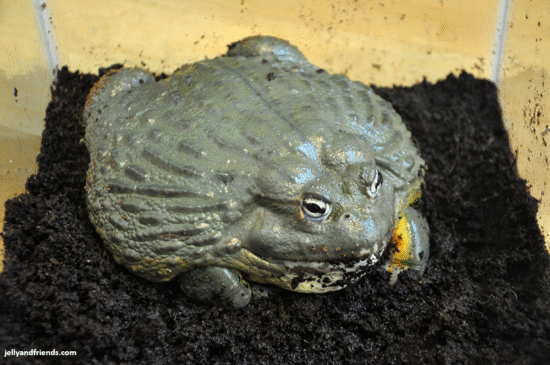
Native to sub-Saharan Africa, they are known for their massive size, powerful jaws, and bold, no-nonsense demeanor. While their appearance and behavior make them fascinating animals, African bullfrogs are not beginner pets and require knowledgeable, intentional care.
Natural History and Behavior
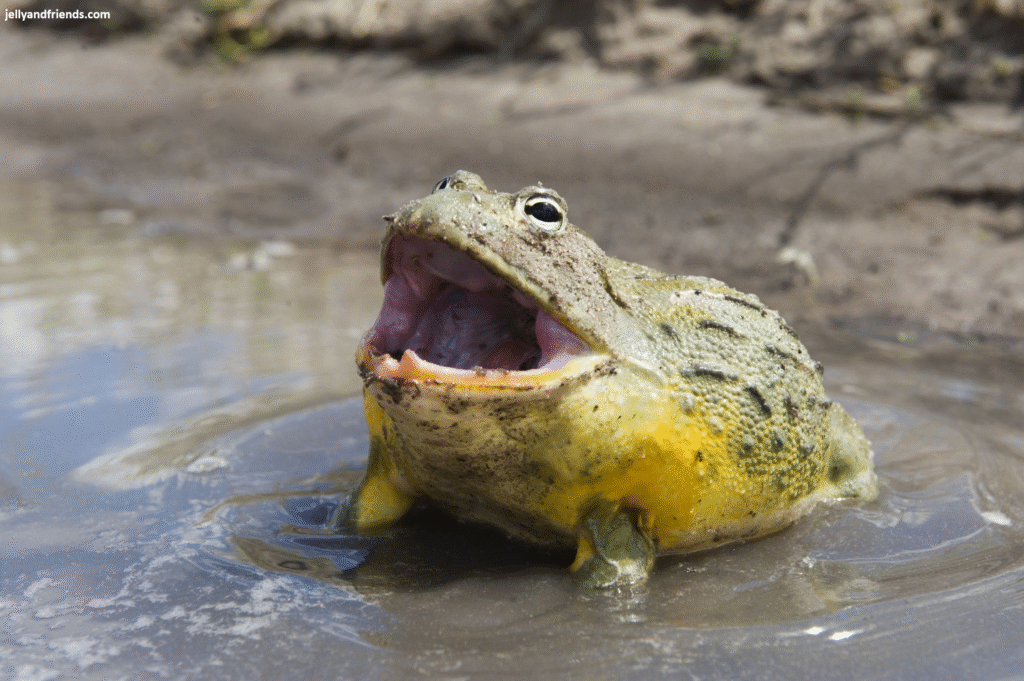
In the wild, African bullfrogs inhabit savannas, grasslands, and floodplains where seasonal rains create temporary pools. They are ambush predators and opportunistic feeders, eating insects, rodents, reptiles, other frogs, and almost anything else they can overpower. During dry seasons, they burrow underground and enter a state of dormancy called estivation, conserving moisture and energy until rains return.
This survival strategy explains many of their captive behaviors. African bullfrogs are generally sedentary, territorial, and highly food-motivated. They do not seek handling or interaction and should be observed rather than treated as hands-on pets.
Size and Lifespan
African bullfrogs are among the largest frogs kept in captivity. Adult males can reach 8–10 inches in length and weigh up to 4 pounds, while females are smaller but still robust. With proper care, they can live 20–40 years, making them a long-term commitment comparable to some reptiles.
Housing and Environment
Because of their size and strength, African bullfrogs require sturdy, spacious enclosures. A single adult should be housed alone in at least a 40-gallon enclosure, with more space always being better. Substrate should retain moisture without being muddy—coco fiber or soil mixes are commonly used.
Humidity should be kept moderate to high, with access to a large water dish for soaking. Temperatures typically range from 75–85°F during the day, with a slight nighttime drop. Clean water, regular substrate changes, and good ventilation are critical, as African bullfrogs are sensitive to poor water quality.
Diet and Feeding
African bullfrogs are aggressive feeders with strong feeding responses. A proper diet includes appropriately sized insects (such as roaches and worms), occasional vertebrate prey when advised by a qualified keeper or veterinarian, and proper supplementation. Overfeeding is a common issue and can lead to obesity and health problems, so feeding schedules must be carefully managed.
Feeding should always be done with tools such as tongs to avoid accidental bites—African bullfrogs can and will bite if they mistake fingers for food.
Handling and Safety
Handling African bullfrogs is generally discouraged. Their skin is sensitive, they experience stress easily, and their bite force is strong enough to cause injury. When handling is absolutely necessary—for enclosure maintenance or health checks—it should be brief, gentle, and done with clean, wet hands or gloves.
These frogs are best suited for keepers who value observation, husbandry, and respect for natural behavior over interaction.
Is an African Bullfrog Right for You?
African bullfrogs are impressive animals, but they are not pets for everyone. They require space, consistency, patience, and a deep understanding of amphibian care. For those willing to meet their needs, they offer a unique opportunity to observe one of nature’s most formidable amphibians up close.
Responsible ownership means recognizing that fascination should always come second to welfare. African bullfrogs thrive best when their keepers prioritize education, preparation, and long-term commitment.
Sources:
British Herpetological Society. (n.d.). Amphibian care and welfare resources.
Amato, G., & Ferris, D. (2010). Amphibians of Africa. Academic Press.
Bartlett, R. D., & Bartlett, P. (2009). Frogs, Toads, and Salamanders. Barron’s Educational Series.
AmphibiaWeb. (n.d.). Pyxicephalus adspersus species account.
International Union for Conservation of Nature (IUCN). (n.d.). Pyxicephalus adspersus Red List assessment.
Wright, K. M., & Whitaker, B. R. (2001). Amphibian Medicine and Captive Husbandry. Krieger Publishing Company.