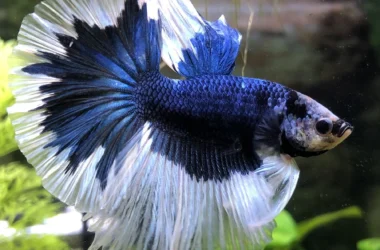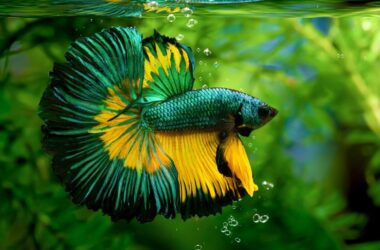
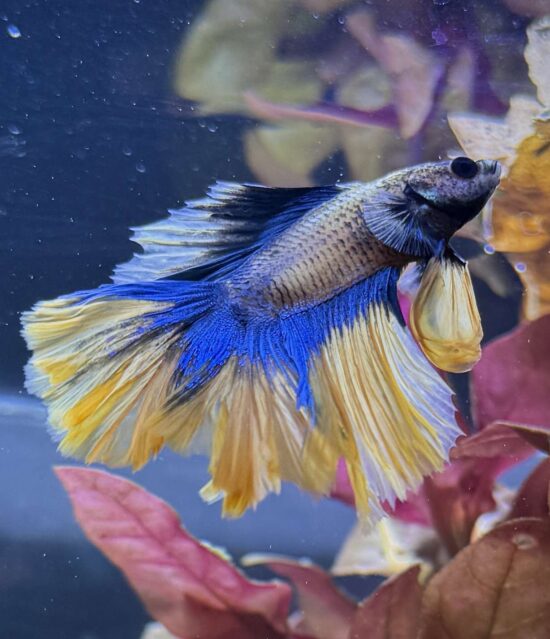
While bettas can survive under those conditions, survival is not the same as a healthy, enriching life. With the right setup and care, bettas are active, curious fish that display vivid color, strong finnage, and engaging behavior for many years. Pictures are from our friend Laconia a marble koi betta fish!
At Jelly & Friends, we believe responsible animal keeping means aiming higher than the bare minimum. Understanding how bettas live in nature helps us design environments that allow them to flourish rather than simply persist.
Understanding the Betta’s Natural World
In the wild, bettas originate from warm regions of Southeast Asia, where they inhabit shallow ponds, flooded rice fields, slow canals, and marshy waters. These environments are often low in oxygen, which is why bettas evolved a special organ that allows them to breathe air from the surface. This adaptation lets them survive where many other fish cannot, but it does not mean they prefer cramped or neglected conditions.
While wild habitats may be shallow, they are expansive, complex, and rich with plant cover. Bettas are not confined to small spaces in nature. They move, explore, hunt, and rest among vegetation in stable, warm water.
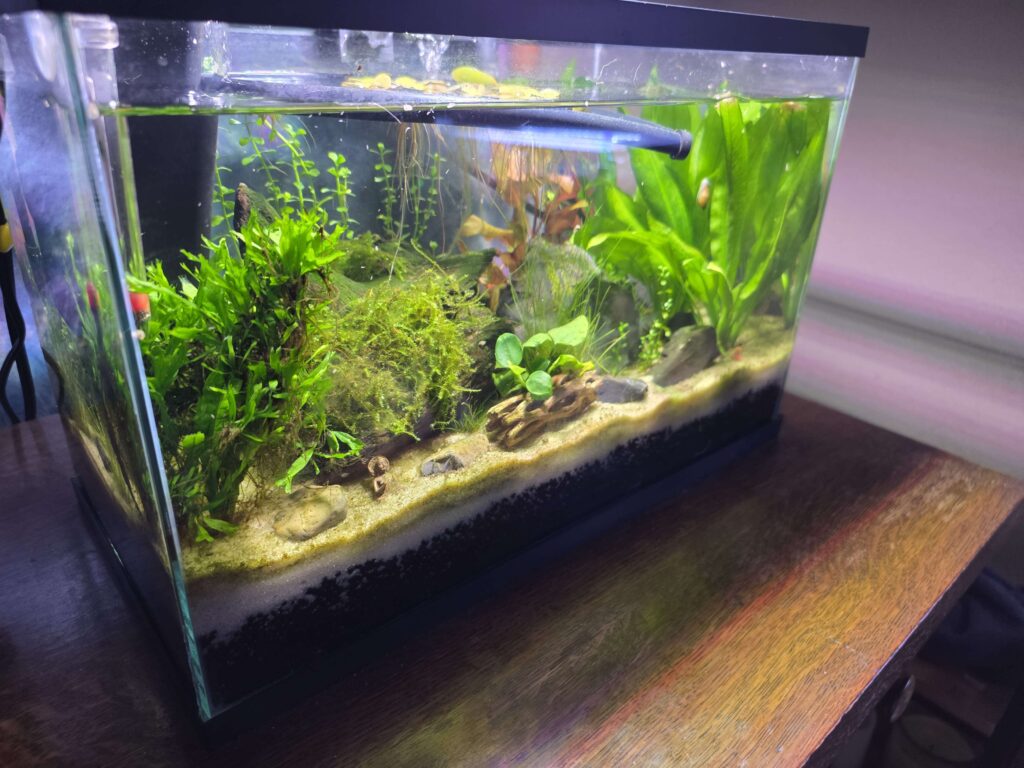
Why Tank Size Matters
A larger aquarium provides more than swimming space. It creates stability within the aquatic environment. Small containers accumulate waste rapidly, allowing ammonia levels to spike with little warning. Even frequent water changes struggle to keep conditions safe in very small volumes.
Providing a tank of several gallons dramatically improves water quality, reduces stress, and allows bettas to move naturally. Bettas kept in appropriately sized aquariums consistently show stronger muscle tone, better fin condition, and longer lifespans than those confined to tiny bowls.
Gentle Water Flow Is Essential
Bettas are not built for strong currents. Their long, flowing fins are designed for calm water rather than constant resistance. In tanks with powerful filtration or fast-moving flow, bettas may become exhausted, stressed, or forced to hide in one corner just to rest.
The ideal setup uses soft, adjustable filtration that gently circulates water without pushing the fish around. Sponge filters, air-driven filters, or low-flow hang-on-back filters are excellent options. The goal is clean water without turbulence.
Plants: Function and Comfort
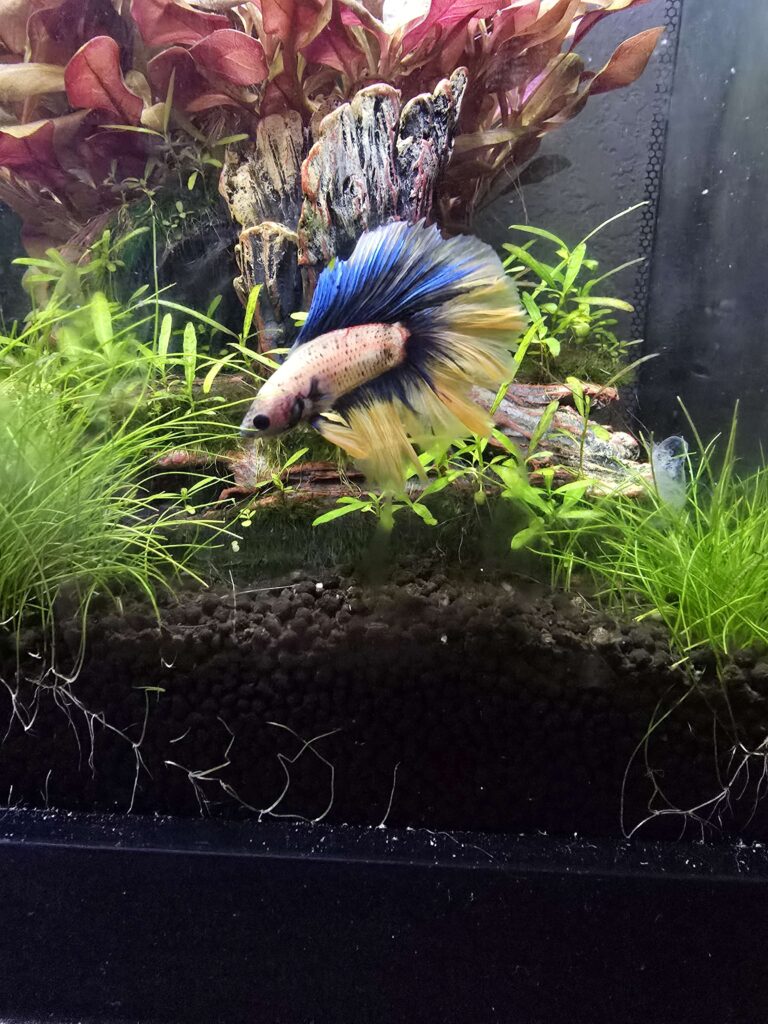
Live aquatic plants play a major role in betta health. They help absorb waste, improve water quality, and create a more natural environment. Plants also offer resting places near the surface, which bettas appreciate since they frequently breathe air.
Floating plants, broad-leafed species, and gentle aquascaping provide shelter and reduce stress. If live plants are not feasible, high-quality silk plants are a safer alternative than rigid plastic décor.
The Importance of Filtration
A common myth is that bettas do not need filters. In reality, filtration is one of the most important factors in long-term health. Without it, toxins build quickly, damaging fins, weakening immune systems, and shortening lifespan.
Filtered tanks support beneficial bacteria that break down harmful waste. Bettas kept in filtered environments consistently display brighter colors, intact fins, and more active behavior.
Proper Water Temperature
Bettas are tropical fish and require warm water to function properly. Consistently cool temperatures slow their metabolism, reduce activity, and weaken their immune response. Excessively warm water has the opposite effect and accelerates aging.
A stable, heated aquarium in the mid-to-upper 70s Fahrenheit provides the best balance for digestion, activity, and longevity. Small, adjustable heaters are inexpensive and make a dramatic difference in betta well-being.
Feeding Bettas the Right Way
Bettas are carnivores. In the wild, they feed on insect larvae, tiny crustaceans, and other small prey. Diets based heavily on plant matter do not meet their nutritional needs.
A high-quality betta pellet or frozen and live protein foods such as brine shrimp, daphnia, or bloodworms should form the core of their diet. Feeding small portions once or twice daily helps maintain healthy weight, vibrant coloration, and strong fin growth. Overfeeding should be avoided, as bettas are prone to digestive issues.
Moving Beyond the “Decoration Fish” Myth
Bettas are often treated as living décor rather than animals with real needs. This outdated mindset leads to unheated bowls, stagnant water, and preventable health problems. When given proper care, bettas show personality, recognize their caretakers, and interact with their environment in fascinating ways.
A Better Standard for Betta Care
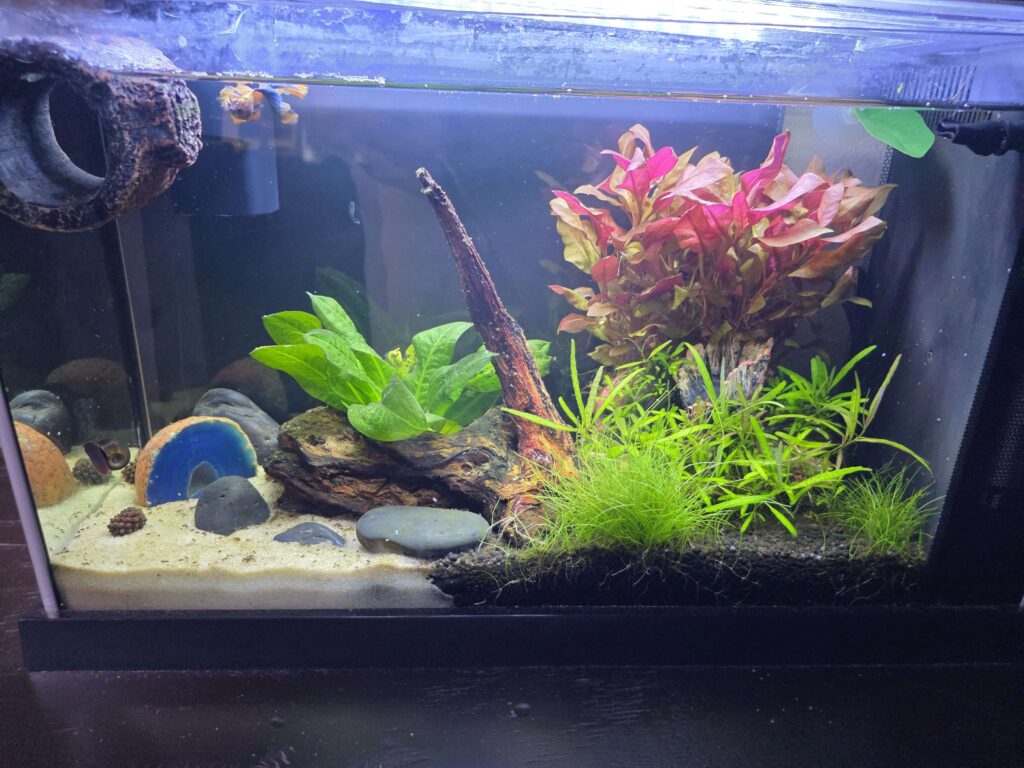
Good betta care is not complicated. It simply requires intention. Adequate space, gentle filtration, warm water, a protein-rich diet, and thoughtful aquascaping work together to support a long, healthy life.
At Jelly & Friends, we encourage keepers to move beyond what a betta can endure and instead focus on what allows them to thrive. When cared for responsibly, bettas reward their keepers with years of color, movement, and character, proving they deserve far more than a bowl on a shelf.