
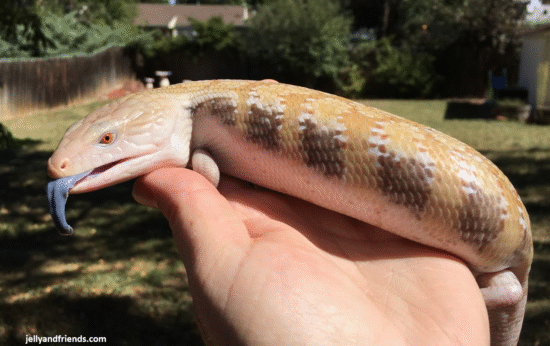
Native to northern and central Australia, these skinks are known for their stocky bodies, expressive behavior, and unmistakable bright blue tongue. Their calm nature and adaptability make them a favorite among reptile keepers, though they still require informed, responsible care.
Natural History and Behavior
In the wild, Northern Blue-Tongue Skinks inhabit open woodlands, grasslands, and scrublands. They are terrestrial and diurnal, spending their days basking, foraging, and sheltering under logs or vegetation. Unlike many reptiles, blue-tongue skinks are highly opportunistic omnivores and will eat both animal prey and plant matter.
Their iconic blue tongue is a defensive display used to startle predators when threatened. Rather than being aggressive, blue-tongue skinks rely on bluffing, hissing, and body language to avoid conflict. In captivity, many individuals become calm, curious, and tolerant of human presence with consistent, respectful handling.

Appearance and Size
Northern Blue-Tongue Skinks are the largest of the blue-tongue subspecies. Adults typically reach 18–24 inches in length and have thick, muscular bodies with smooth, armored-looking scales. Their coloration ranges from silvery gray to tan, often marked with dark banding across the back.
With proper care, Northern Blue-Tongue Skinks can live 20–30 years, making them a long-term commitment similar to parrots or tortoises.
Housing and Environment
Blue-tongue skinks require spacious, horizontal enclosures that allow for movement and natural behaviors. A single adult should be housed in at least a 4x2x2-foot enclosure, though larger is always better. The enclosure should include hides on both warm and cool sides, climbing enrichment, and a substrate suitable for burrowing, such as soil-based mixes or cypress mulch.
Temperatures should include a basking spot of 100–105°F, with a cooler side around 75–85°F. Proper UVB lighting is strongly recommended to support calcium metabolism and overall health. Clean water must always be available, and regular enclosure maintenance is essential to prevent bacterial buildup.
Diet and Feeding
Northern Blue-Tongue Skinks are omnivores with diverse dietary needs. A balanced captive diet includes insects, lean proteins, vegetables, and leafy greens, with occasional fruits as treats. Calcium and vitamin supplementation is often necessary, especially for growing juveniles.
Because they are enthusiastic eaters, obesity is a common issue in captive blue-tongues. Careful portion control and varied nutrition are key components of responsible care.
Handling and Temperament
One of the reasons Northern Blue-Tongue Skinks are so popular is their generally calm temperament. With slow, respectful handling, many individuals become comfortable being held and may even recognize their keepers. However, each skink has its own personality, and interaction should always be on the animal’s terms.
Stress signals—such as excessive hissing, hiding, or refusal to eat—should never be ignored. Building trust takes time, consistency, and patience.
Is a Northern Blue-Tongue Skink Right for You?
Northern Blue-Tongue Skinks are excellent ambassadors for reptile education and responsible ownership. They are intelligent, engaging, and resilient when properly cared for—but they are not low-maintenance pets. Their size, lifespan, and space requirements mean they are best suited for keepers prepared for a long-term commitment.
When cared for ethically, blue-tongue skinks offer a rare opportunity to build trust with a reptile while learning to appreciate the complexity of reptilian behavior.
Sources:
British Herpetological Society. (n.d.). Reptile welfare and husbandry guidance.
Highfield, A. C. (1990). Practical Encyclopedia of Keeping and Breeding Lizards. Carapace Press.
Reptile Database. (n.d.). Tiliqua scincoides intermedia species profile.
International Union for Conservation of Nature (IUCN). (n.d.). Tiliqua scincoides Red List assessment.
Australian Museum. (n.d.). Blue-Tongue Skink species overview.
Stahl, S. J., Donoghue, S., & Lewbart, G. (2011). Reptile Medicine and Surgery. Elsevier.




i really liked this article